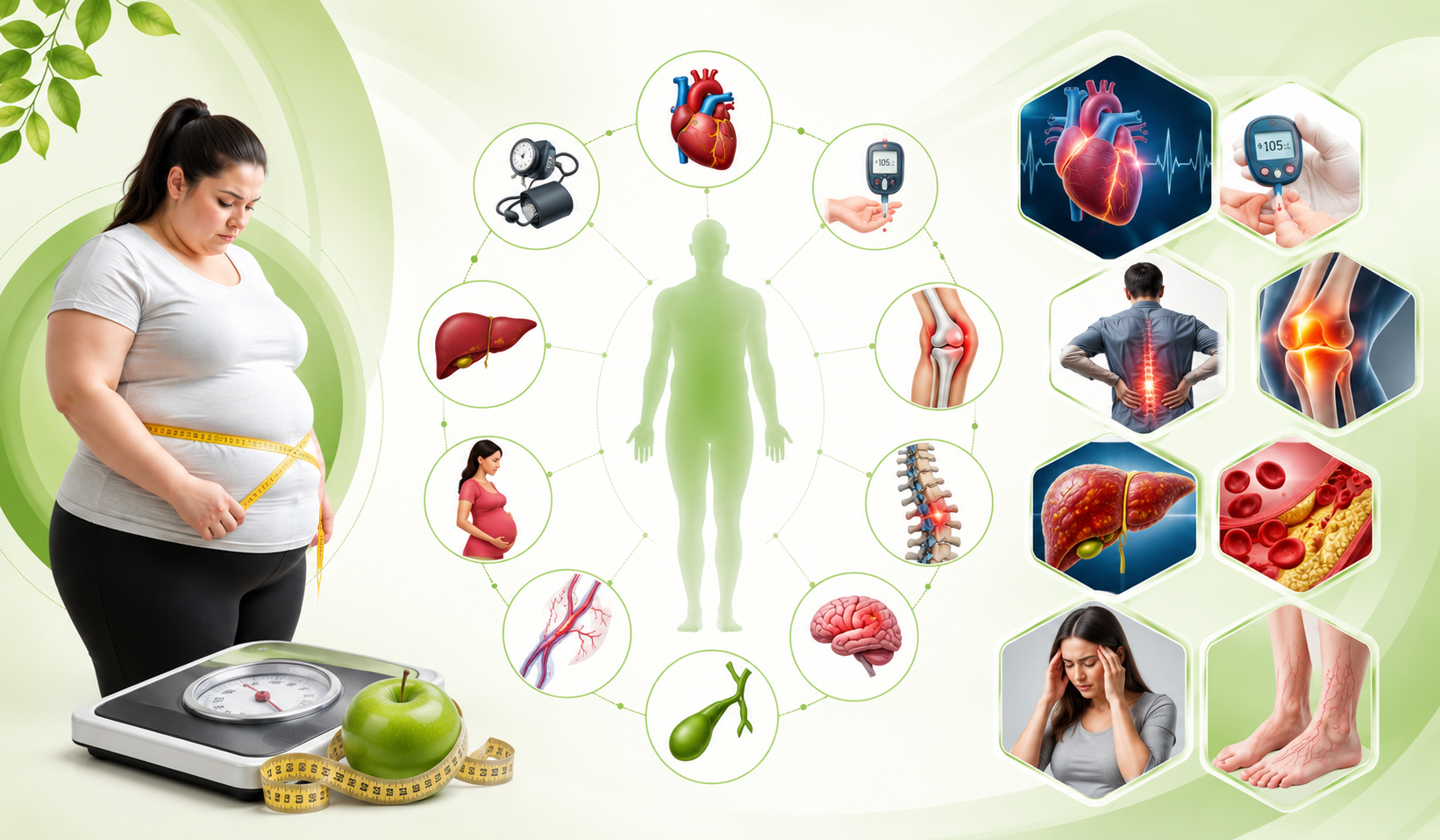
Learn About The Dangerous Diseases Caused By Obesity
Obese people are never fully healthy. Obesity and the faulty lifestyle associated with it, lead to a very wide range of diseases, some of which may not even appear to be directly connected to obesity.
The obese tend to be irritable, stressed out, depressed and may have poor self-esteem. Their energy levels are low and they tire quickly. There are pains and aches everywhere. Backache and joint pains are common. Spondylosis, prolapsed discs, osteoarthritis, osteoporosis, varicose veins, cholecystitis (inflammation of the gall bladder), and some hernias are prevalent in the obese.
Knee pain, backache and pain in the heals are constant companions of obesity. More and more people are undergoing total knee replacement and back surgeries now than ever before.
Fatty liver (hepatic steatosis) is often associated with obesity. Some fat is there in a healthy liver, but accumulation of excessive fat in liver is called fatty liver. It can lead to inflammation and damage to the liver tissue and scarring (fibrosis) of the liver parenchyma. Extensive liver fibrosis leads to cirrhosis, which can cause liver failure, which is a life threatening illness.
High blood pressure, diabetes, coronary heart disease and cerebral strokes (paralysis) are frequently associated with obesity.
Amongst obese ladies infertility, difficult pregnancies and labour, abortions and complications during a caesarean section are common.
Polycystic ovarian disease is common amongst young women. PCOD is a condition in which the ovaries develop small fluid filled sacs or cysts, causing hormonal imbalances and the menstrual periods are generally delayed or completely absent. This condition is usually associated with weight gain and frequently with infertility.
The first line of treatment of PCOD is weight reduction, which usually reverses PCOD. Hormonal therapy is usually ineffective, causes more weight gain and aggravates the condition. It is best left alone.
The obese always have a greater risk during surgery.
Apart from these diseases, a wide range of other diseases, including some cancers, are linked to obesity and the faulty life style associated with it. Certain cases of vertigo (giddiness) and migraine (a kind of headache) are also seen to be associated with obesity and weight reduction helps the patient tremendously.
The High Risk Abdominal Obesity and Metabolic Syndrome:
Excessive accumulation of fat in the abdomen is associated with high blood pressure, high blood sugar levels, high serum triglycerides levels and low serum high density lipoprotein (HDL) cholesterol. Having a clustering of three of these five conditions is called the metabolic syndrome and it is closely associated with development of heart disease and type 2 diabetes.
Wikipedia describes metabolic syndrome as: