
Designing A Healthy Weight Loss Food Plan!

We always update Medicross medical news as well as notable medical news around the world, read the latest news about our center.

Call Us when you Need Help!
24/7 Support: +1 800-123-1234

Healthy Food Plan For Healthy Weight Loss!

Today millions of people all over the world are frustrated with obesity and the dangerous diseases associated with it. Most of them would give anything to find a perfectly healthy weight loss diet.

Are you one of them?

This is how we can plan a safe, simple and healthy weight loss food plan that you can follow all your life.

Our breakfast generally includes dishes like chapatis, pohe, upama, idli, dosa and thalipith. Our lunch and dinner include chapatis, bhakri, rice, dals, and vegetables. The food of South Indians revolves around idli, dosa and rice and sambar. Of these chapatis, bhakri and rice are made from cereals. Dals and sambar are made from pulses. Idli and dosa are made from rice and udid dal, so they include both cereals and pulses.

Wheat, rice, jowar, bajri, nachani, oats, and corn are cereals. Red gram, green gram, Bengal gram, lentils, and legumes are pulses. Together they not only provide us with adequate carbohydrates and energy, a wide range of vitamins, minerals and fiber but also most of our protein needs. Fruits and vegetables provide us with a wide range of vitamins, minerals, antioxidants, and fiber to make our food more complete. The cooking oil and the concealed fat in every food that we eat provide us with the essential fats that we need.
Omega 3 fatty acids are an important component of the essential fats that our body needs. Amongst other functions, they also protect our heart from coronary artery disease. Omega 3 is of two types, the sea source and the vegetable source omega 3. Of these, the sea source omega 3 is more potent in protecting the heart than the vegetable source omega 3. Unfortunately, it is available only in sea fish. So it is outbounds for many Indians, a few people eat fish. One solution to this problem is to take omega 3 supplements. Vitamin D is available in very few foods. But our bodies build Vitamin D when our skin is exposed to sunlight. We can get adequate Vitamin D by getting exposed to about 5 minutes of sunlight daily.
Thus chapati, rice, bhakri, idli, dosa, dal, sambar, usal, pithla, vegetables, milk, fruit and sea fish and a healthy cooking oil make up a completely balanced diet! Also, make sure to get about 5 minutes of exposure to sunlight every day, to get enough Vitamin D. Along with this, we also have to avoid the following high carbohydrate and high-fat foods to keep our calorie consumption moderate.
Avoid high carbohydrate foods like Sugar, jaggery, sago, honey, rava, maida and refined flours.
Also avoid fried foods, bakery products, and fast foods.
Avoid high-fat foods like groundnuts, coconut, sesame, cream, ghee, butter, cheese, and full cream paneer.

This is the simplest, safest and healthiest food plan that you can follow lifelong to become slim and healthy for a lifetime. Call it the healthiest weight loss diet, if you like!

Once you settle into this kind of food plan and you can reduce a little bit of rice and chapatis from your meals, even half a chapati and half a bowl rice would be fine for most people and start walking twice a day. Slowly you can reach a level of a brisk walk of half an hour twice a day.
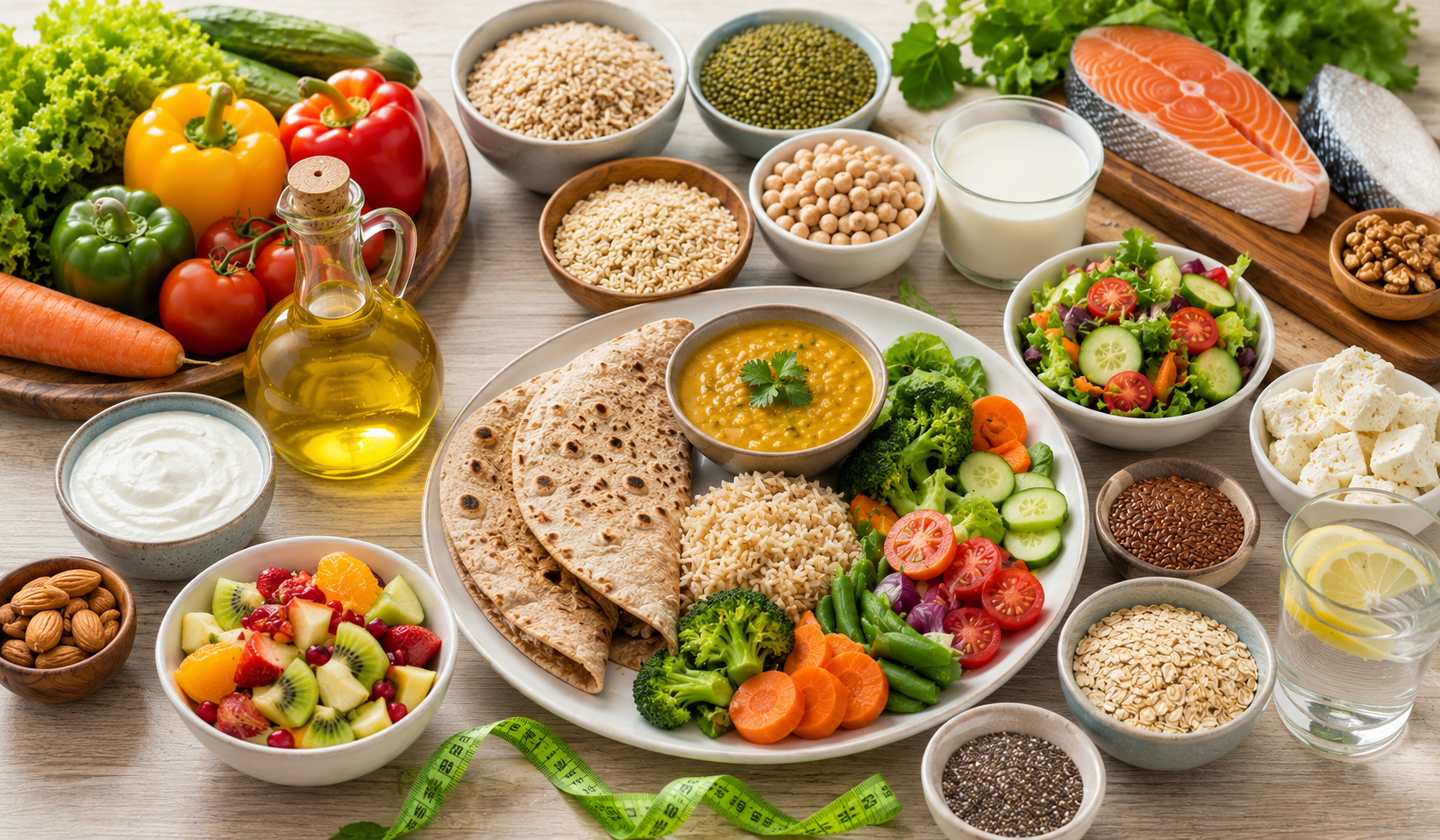

If you persist, you will start losing weight healthily and happily and slim down in due course of a few months, your skin and hair health will be at their best and your blood pressure, sugar, cholesterol, triglycerides levels will correct themselves and you will get fighting fit.
This is the only safe and simple way of living that can make you slim and healthy for a lifetime!

Note

Also read the articles ‘Basics Of Nutrition‘ and ‘Simple Steps To Slimming‘ on this website.

FAQs About Construction Material Testing

Why is construction material testing important?
Construction material testing ensures that materials meet required quality standards, helping prevent structural failures, reduce risks, and improve project durability.
What materials can be tested in your laboratory?
We test concrete, soil, aggregates, cement, steel reinforcement bars, bitumen, asphalt, bricks, blocks, and other construction materials.
How long does testing take?
Testing timelines vary depending on the type of material and test requirements. Most standard tests are completed within a few days, while specialized investigations may require additional time.
Do you provide on-site testing services?
Yes. We offer both laboratory and on-site testing services, including field density testing, concrete sampling, NDT inspections, and geotechnical investigations.
Are your test reports accepted for government and infrastructure projects?
Our reports follow recognized industry standards and can be used for quality control, project approvals, compliance requirements, and engineering documentation.
How can I request a material testing service?
Simply contact our team with your project requirements, and we will recommend the appropriate testing procedures and provide a detailed quotation.

Why Choose Us?

35+ Years of Clinical Experience
Natural Weight Loss Without Starvation
Distance Program Available Worldwide
Healthy Food That You Eat Every Day
Lifelong Health Management

Make A Quick Inquiry