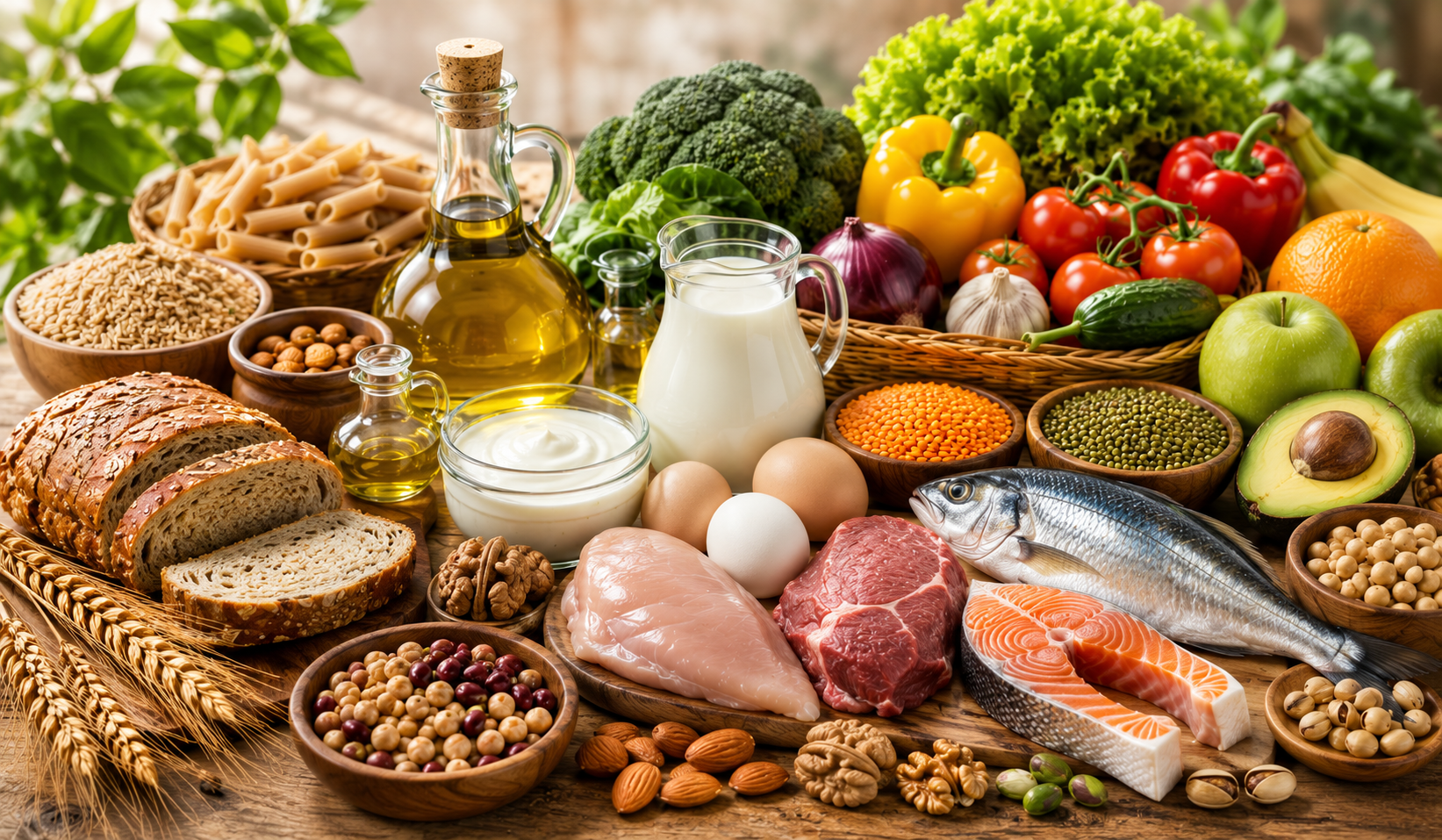
Basic Knowledge About The Food We Eat Everyday
A healthy lifestyle including sound nutrition, sound exercises, adequate rest and mental peace and happiness is the foundation of holistic or comprehensive health. You need to know the scientific basics of sound nutrition to be able to eat healthily and get and stay slim for a lifetime.
Our food is composed of the following nutrients: carbohydrates, proteins, fats, vitamins, minerals and water.
Carbohydrates:
Carbohydrates are made up sugar molecules.
Carbohydrates are of two types, viz. simple and complex carbohydrates. Simple carbohydrates are made up of one or two sugar molecules while complex carbohydrates are made up of long chains of glucose molecules.
Sugar, jaggery, honey, arrowroot, sago, rava, maida, refined corn flour are simple carbohydrates. Starch and fibre are the two main types of complex carbohydrates and cereals and pulses are the main sources of complex carbohydrates. Starches are the main source of energy in our food.
Fibre includes all the parts of plant foods that we cannot digest or absorb. It is of two types, soluble and insoluble. All complex carbohydrates foods have both kind of fibre in different proportions. Soluble fibre forms a gel like substance in the gut and it absorbs some of the cholesterol and sugars in the food and clears it out of the bowel, thus helping lower both blood cholesterol and blood sugar. Insoluble fibre obviously does not dissolve in water. It absorbs water, adds bulk, softens stools and speeds up its transit through the bowels and relieves constipation. It regulates bowel movement, promotes growth of useful bacteria in the bowels, regulates the pH in the bowels, helps eliminate toxins from the bowels and helps prevent colitis, haemorrhoids and colon cancer.
Stay away from simple carbohydrates to keep your diet healthy.
Wheat, rice, jowar, bajra, nachani (ragi), corn and oats are cereals. Green gram, red gram, bengal gram, lentils and all kinds of beans including ‘rajma’ and ‘chole’ are pulses and legumes. Cereals and pulses together form the major bulk of our Indian food. Carbohydrates are the primary source of energy in our diet. They also have a ‘protein sparing’ function. Unless we eat enough carbohydrates to get adequate fuel energy, the proteins in our diet will not be ‘spared’ to carry out their primary functions and they will be used up by the body as an energy fuel. Because of this, all low carbohydrate, low calorie diets also inflict protein deficiency upon you irrespective of how much protein you consume through food or expensive protein supplements.
When consumed in excess of body requirements, carbohydrates are converted into fats and stored in the body, causing weight gain. In a healthy diet, carbohydrates must contribute fifty to sixty per cent of the energy required by our body.
Proteins:
Proteins are among the most important nutrients required by the human body. They form the structural and functional foundation of all tissues of the body.
Proteins are made up of smaller units called amino acids, which the body uses to build muscles, organs, skin and blood, and to produce enzymes, hormones and substances involved in immunity and defence.
Of these, the body can synthesise some amino acids while it cannot synthesise some amino acids. While we need all amino acids, the ones that the body cannot synthesise are called essential amino acids and we essentially need to get them from food.
Proteins are not meant to be consumed as a source of energy under normal circumstances. But in case of people on very low carbohydrate – low calorie diets, the proteins in their food are used up as a source of energy and such people suffer from protein deficiency even if there is sufficient protein in their food. When consumed in excess of body needs, proteins are converted into fats and stored in the body, causing weight gain.
Fats:
Monounsaturated Fatty Acids:
Polyunsaturated Fatty Acids:
Saturated Fatty Acids:
Trans fatty acids:
Trans Fatty Acids: A Significant Cardiovascular Risk
Trans fatty acids (trans fats) are unsaturated fats formed when vegetable oils undergo hydrogenation, a process that converts liquid oils into semi-solid fats. This modification improves texture and prolongs shelf life, which is why hydrogenated oils have traditionally been used in bakery products, packaged snacks, margarine, vanaspati, and other processed foods.
Vitamins:
Vitamins are group of substances those are essential for growth, development and repair of tissues, normal, healthy functioning of all cells and tissues, bones, conversion of food into energy, healthy maintenance of all senses, including vision, immunity and hundreds of other functions. They are also vital for the health of organs including the heart.
Minerals:
Cholesterol:
Cholesterol is a waxy, sticky, fat like substance produced in the liver and it is also present in our food.
Most people only know that it causes heart disease, few know that it is an essential constituent of our body and has a vital role to play in our health.
Excess cholesterol in the blood is bad for the heart. The HDL cholesterol is the healthy cholesterol, while the LDL and the VLDL cholesterol are bad for the health of the heart. HDL cleanses our arteries by transporting cholesterol from the arteries to liver and cleansing the arteries, thus protecting us from coronary heart disease. The latter two transport cholesterol from liver to the arteries, where it sticks the walls of the arteries, which become hardened and lose their elasticity, causing atherosclerosis and clogging of the arteries leading to coronary heart disease.
Normal range is always provided by every laboratory in its report.
Keeping Your Cholesterol Levels Healthy:
To keep your cholesterol levels healthy, you need to take following steps:
Balanced Nutrition:
You need to eat from four basic food groups for your diet to be balanced.
Choosing A Healthy Cooking Oil:
Note
Also read the articles ‘Dangers Of Unscientific Treatments‘ and the ‘The Good And The Bad Fats‘ on this website. Get in touch with us through the ‘Contact Us‘ page on this website.